Implementation
Peatland restoration requires practical decisions across hydrology, water quality, vegetation, land management, and long-term governance. The implementation section brings together tools and guidance to support practitioners and policymakers during the restoration process. The tools are designed to help users identify peatland habitat types, assess restoration barriers, explore country-specific guidance, and adapt restoration measures to local ecological conditions. Because peatland systems are dynamic and often affected by multiple interacting pressures, successful restoration depends on adaptive management, collaboration between planning and field teams, and continuous learning throughout implementation.
Habitat Identification Decision Tree
Peatlands differ strongly between regions and site conditions. Restoration measures that are appropriate for one habitat type may not work for another. The habitat identification wizard User interface element that guides you step by step. helps users narrow down the most likely habitat type based on ecological characteristics and site conditions.
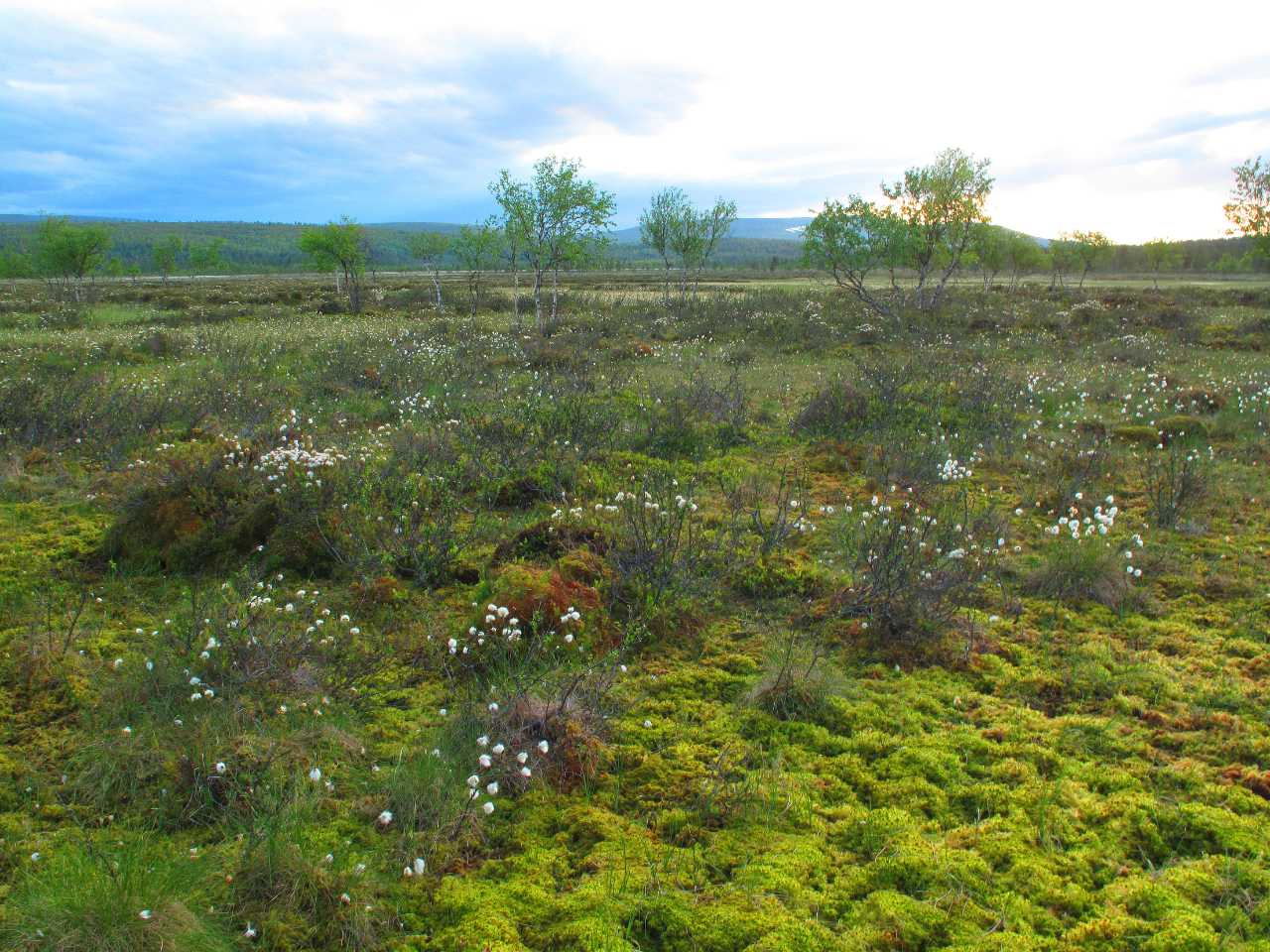 © Hannu Nousiainen
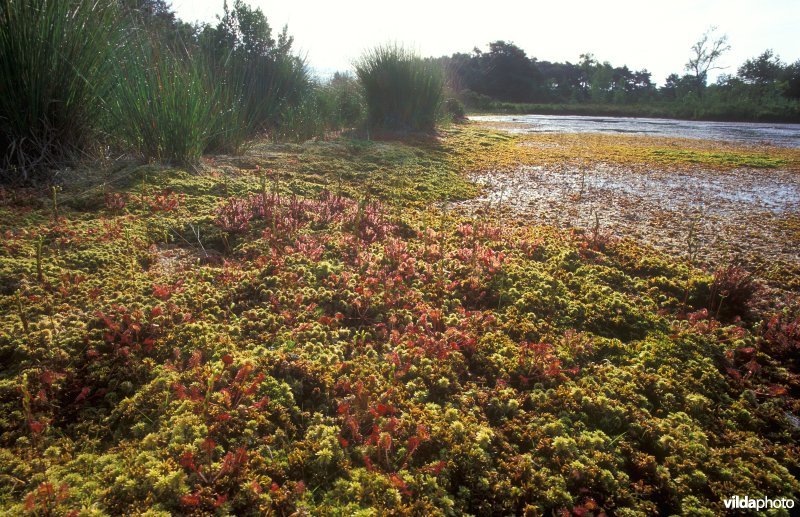 © Yves Adams, Vilda
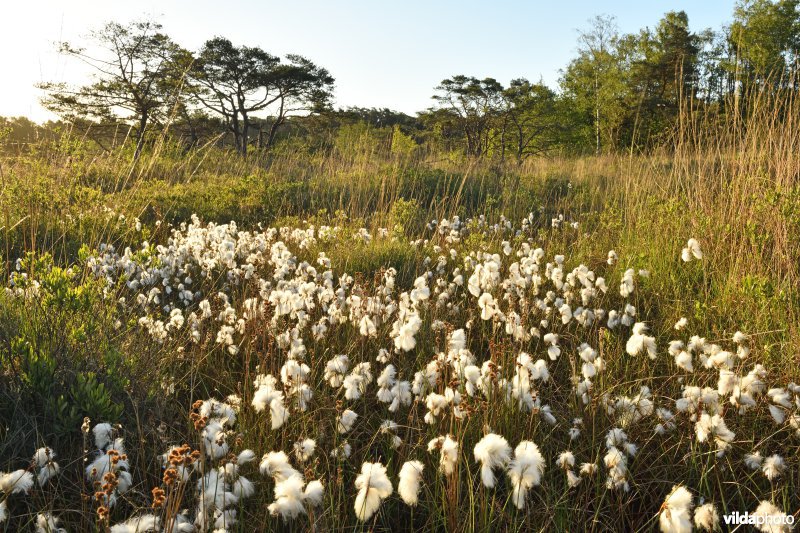 © Yves Adams, Vilda
Peatland systems are rarely fully intact or fully degraded. Many sites are transitional, partially degraded, or shifting over time because of drainage, eutrophication, climate change, or changing hydrology. In practice, sites may combine fen and bog characteristics, retain only part of their original functions or respond unevenly to restoration measures. For practitioners, this means restoration should focus on ecological processes rather than strict habitat labels.
Key questions include:
- Is peat still forming?
- What controls the water balance?
- Are nutrients entering the system?
- Which ecological functions remain active?
Not all sites can return to their historical condition. In some cases, the priority may be to stabilise peat, improve hydrology, reduce emissions, or strengthen resilience rather than recreate a former habitat exactly. Because peatlands are dynamic systems, restoration should be adaptive. Monitoring, phased interventions, and regular reassessment are often more effective than fixed restoration targets.
Decision tree for restoring degraded fens and bogs
Degraded peatlands are often affected by multiple interacting pressures, including drainage, altered hydrology, nutrient enrichment, peat oxidation, and fragmentation. The restoration wizard User interface element that guides you step by step. helps practitioners assess these barriers through six connected phases: hydrology, water chemistry, nutrients, management, species recovery, and resilience. Each phase contains practical questions, highlights common restoration mistakes and risks, and points to priority actions where relevant. The tool encourages a staged and adaptive approach, recognising that successful restoration often depends first on restoring hydrological function before addressing vegetation recovery, species return, or long-term management.
Country specific guidelines map
Restoration guidance differs between countries because of variation in peatland types, legislation, monitoring systems and management traditions.
The interactive map allows users to explore country-specific guideline documents. Users can select a country and access available restoration guidance directly. For example, a user selecting Finland can view Finnish peatland restoration guidelines and related resources. The map is intended to improve access to national guidance and support knowledge exchange between regions.
| Publication | Author(s) | Year |
|---|---|---|
| Global guidelines for peatland rewetting and restoration | Convention on Wetlands | 2021 |
| Restoration of Lakes, Streams, Floodplains, and Bogs in Europe | Eiseltová | 2010 |
| Ecological restoration of rich fens in Europe and North America | Lamers et al. | 2015 |
| Global Peatland Restoration Manual | Schumann & Joosten | 2008 |
| Management effectiveness of wetland-protected areas | McInnes et al. | 2023 |
| Investing in wetland restoration: Practical guidance | Herb & Finlayson | 2023 |
| Peatlands — guidance for climate change mitigation | FAO | 2012 |
Click a highlighted country on the map to see available peatland restoration guidelines.
The human factor in restoration
Inadequate implementation of peatland restoration projects appear avoidable, but are frequently cited as a cause of poor restoration outcomes.[1],[2] To avoid this, optimal results can be achieved through collaboration between the planning and on-site teams to translate desired outcomes into practical directions. Appropriate training should be provided to workers so that any unfamiliarity with peatland conditions is accounted for, and that any unique skills or techniques associated with particular restoration treatments are understood. For example, the techniques required for creating hummock-hollow A typical feature of peatlands with surface variation between raised mounds (hummocks) and depressions (hollows). microtopography to establish diverse habitats for colonization, differ significantly from establishing an even surface required for rewetting. On-site supervision from a terrain expert is also recommended to identify high-risk zones and provide guidance to workers.
Tailoring restoration activities
Unforeseen conditions (e.g., unpredictable ecological responses, unstable ground, access constraints) will inevitably require changes to the restoration plan during implementation. Designers can prepare for this by consulting with experienced restoration professionals during the planning phase to anticipate potential issues. However, the most critical design adjustments happen on the ground.[3],[4] As the on-site team gains a practical understanding of the site’s unique characteristics, an iterative refinement with the planning team becomes essential. Unforeseen conditions are communicated back to the planning team and incorporated into the adaptive design to ensure the project remains on track. These adaptations must be evaluated and shared with stakeholders and decision-makers, including regulatory agencies where applicable. This is essential to inform potential changes in design or implementation, guide remedial actions, and shape long-term management strategies. The outcomes of any actions taken, especially those of remedial efforts, should then be used to continuously improve future restoration and design.[1]
Logistics and materials
Key logistics and materials considerations for the effective implementation of restoration include:
- Low ground-pressure machinery: As peatlands are wet and soft, sharp turns with heavy machinery can rupture the surface peat layer, leading to a loss of load-bearing capacity.[5] In remote areas where machinery cannot bring supplies in, helicopter transport of materials is a non-destructive option.[3]
- Local and sustainable materials: When possible, local sustainable materials like peat, wood, sods, or sand, should be used in restoration.[6][7] However, foreign materials like impermeable cores of plastic or metal may be necessary to construct durable and optimally performing devices, such as dams.[8][9]
Communication
Iterative communication with stakeholders during the project implementation phase is crucial for project success. Regular meetings, either in-person or digital should be accessible to a wide audience and incorporate Q&A to guarantee bidirectional communication. Key achievements can be presented through cultural events or media reports to foster public relations by including policy makers and donors in the success story of the project, thereby creating and maintaining support and funding for future projects. Guided site tours can be used to demonstrate restoration practices to local communities and policy makers, and to exchange knowledge and lessons learned with experts. Here, new techniques and adaptations towards local site conditions can be discussed and evaluated. Voluntary and educational activities can foster stewardship and long-term engagement with local communities.
- Herb A. M. & Finlayson C. M. (2023).Investing in wetland restoration: Practical guidance and looking ahead.In P. A. Gell, N. C. Davidson, & C. M. Finlayson (Eds.), Ramsar Wetlands (pp. 377–415). Elsevier. https://doi.org/10.1016/B978-0-12-817803-4.00004-8 ↑ back ↑
- Stelk, M., Christie, J., Weber, R., R. Lewis III, R., Micacchion, M., Harcarik, T., Cowan, L., Famous, N., Teal, J., Bostwick, P., Skidmore, P., Pruitt, B., Urban, L., & Merritt, J. (2017).Wetland Restoration: Contemporary Issues and Lessons Learned. Association of State Wetland Managers. ↑ back
- Parry, L. E., Holden, J., & Chapman, P. J. (2014).Restoration of blanket peatlands.Journal of Environmental Management, 133, 193–205. https://doi.org/10.1016/j.jenvman.2013.11.033 ↑ Human factor ↑ Logistics
- Salm, J.-O., Remm, L., Haljasorg, M., Karofeld, E., Kohv, K., Kohv, M., Kraut, A., Krumm, L., Meriste, M., Oro, L., Pungas-Kohv P, Sellis, U., & Sikk, K. (2022).Restoration of mire habitats: Experiences from the project “conservation and restoration of mire habitats” Handbook.Estonian Fund for Nature. ↑ back
- Similä, M., Aapala, K., & Penttinen, J. (2014). Ecological restoration in drained peatlands: Best practices from Finland.Metsähallitus Natural Heritage Services. ↑ back
- Colomina, D., Cortina, J., Melero, M., Cagide, N., Gann, G., & and collaborators. (2023).WWF-SER standards for the certification of ecological projects for forests in Spain.Version 4.0. SER and WWF Spain. ↑ back
- Gann G.D., McDonald T., Walder B., Aronson J., Nelson C.R., Jonson J., Hallett J.G., Eisenberg C., Guariguata M.R., Liu J., Hua F., Echeverría C., Gonzales E., Shaw N., Decleer K. & Dixon K.W. (2019).International principles and standards for the practice of ecological restoration.Second edition. Restoration Ecology 27 (S1). https://doi.org/10.1111/rec.13035. ↑ back
- Convention on Wetlands. (2021).Global guidelines for peatland rewetting and restoration.Ramsar Technical Report No. 11. Gland, Switzerland: Secretariat of the Convention on Wetlands. ↑ back
- Schumann, M., & Joosten, H. (2008).Global peatland restoration: A manual for policy makers and site managers.Institute of Botany and Landscape Ecology, University of Greifswald. ↑ back