Planning and design
Upon identification of the stressors affecting a peatland and their extent, restoration planning can begin. This is a critical phase, as it defines the project vision, while identifying potential problems and conflicts that might be encountered along the way.[2],[7],[1] Developing a restoration plan is a complex process, requiring engagement with stakeholders, definition of clear goals and objectives, prioritization of restoration options, and effective baseline data. Incorporating these components into the planning phase sets the stage for effective peatland restoration.
Stakeholder engagement
Peatland restoration requires balancing, in addition to ecological objectives, socioeconomic, cultural, and legal considerations. Therefore, effective planning of restoration projects is dependent on engagement with stakeholders who have an investment in the project outcome.[4] For a list of common stakeholder groups that should be engaged during restoration projects, along with reasons for engagement, see Table X.
| Stakeholder Category | Stakeholder | Potential Reasons for Engagement |
|---|---|---|
| Community | Local community | Garnering public support; addressing concerns (e.g., flood risk and land use change) and providing information on the benefits of restoration (e.g., flood mitigation and carbon storage); obtaining local knowledge, fostering community involvement with the project |
| Operational | Landowners and land managers | Acquiring consent for restoration work |
| Scientific and technical experts | Determining the best available information to inform restoration | |
| Investors and funding sources | Procuring the financial resources necessary for restoration | |
| Institutional | Governmental and regulatory bodies | Securing permits and ensuring legal compliance |
During the planning process, conflicts are likely to arise regarding the desired outcomes of restoration and how these outcomes will be achieved. Engagement is critical for navigating these conflicts, as evidenced by a case study presented by Pakalne et al. (2021).[5] In the Estonian LIFE Peat Restore project, restoration of degraded peatlands was considered a national priority. At one project site, two ditches were planned to be blocked for rewetting. However, these ditches were identified as critical spawning streams for salmon and trout, and therefore, protected under law. The restorationists were stuck between two conflicting directives: protecting spawning streams and restoring degraded peatlands. Eventually, after nearly two years of engagement and discussion with stakeholders, a compromise was reached in which restoration continued while preserving spawning stream function and integrity. This case highlights that although engagement can be a lengthy and complex process, it is essential for addressing the needs and concerns of stakeholders to achieve effective restoration.
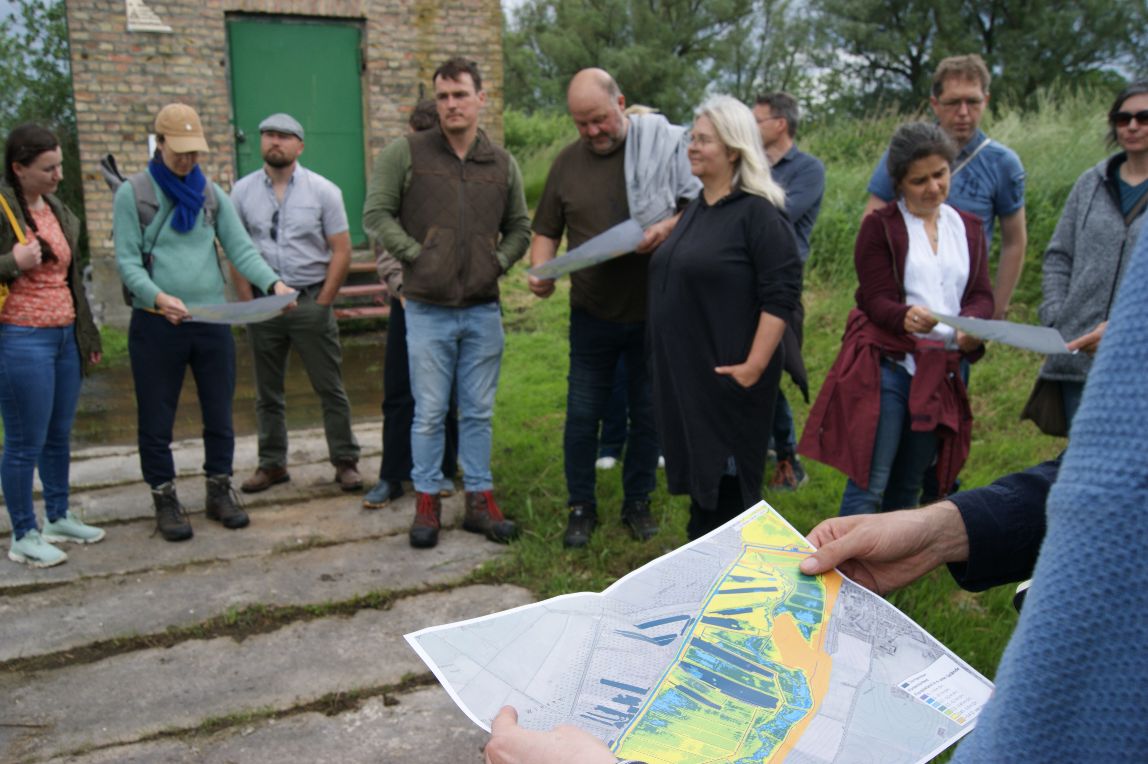
The Upper Peene Valley in Mecklenburg-Western Pomerania is one of the largest contiguous fen landscapes in Central Europe and serves as a Living Lab under the ALFAwetlands project. The region contains approximately 15,000 hectares of fens, half of which are deeply drained and used for agriculture, associated with significant greenhouse gas emissions, peat subsidence and biodiversity loss. The case highlights key structural barriers to restoration, including limited financial incentives, fragmented land ownership, and the need for consensus among multiple stakeholders operating within hydrological units. This illustrates how wetland restoration requires governance at landscape and catchment scale rather than parcel-level intervention, directly informing EU-level recommendations on integrated river basin planning. Since 2019, a participatory process has been developed to overcome these barriers by bringing together farmers, landowners, municipalities, water boards, and conservation authorities. This co-creative governance approach has strengthened trust and shared problem understanding. Within the projects ALFAwetlands and now MOOReturn, this process has been expanded to include spatial planning for rewetting and paludiculture, as well as economic feasibility assessments. A key development is the establishment of infrastructure for biomass processing and paludiculture value chains, in collaboration with the “toMOORow Initiative” and dedicated private-sector enterprises, namely the “Alliance of Pioneers”. This case therefore provides evidence that peatland restoration can be accelerated when governance, spatial planning, and market-based incentives are combined, particularly through integration into regional value chains and private-sector partnerships.
Further, effective restoration requires continuous engagement throughout the entire process. Workshops and field excursions during the planning phase support the co-creative process and advance a social-ecological transformation. Communication channels with stakeholders established early on must be well-maintained and prepared for an adaptive approach. This ensures that unforeseen conditions can be quickly addressed, minimizing project delays.
Goals and objectives
Before restoration treatments, practitioners must determine what the project is trying to achieve. Two levels of target are defined in peatland restoration:
- Goals are general statements indicating the desired medium to long-term ecological or socioeconomic restoration outcomes of the project (e.g., “restore a functioning, peat-forming mire community”; “Reduce GHG emissions on site by X%”).[2]
- Objectives are well-defined, precise statements focused on measurable parameters which outline how the goal(s) will be achieved (e.g., “raise the mean annual water table to within 20 cm of the surface across 80% of the restoration site within five years of intervention”).[8]
Setting goals and objectives requires developing a reference model: a conceptual framework that provides a quantitative representation of the conditions a site could exhibit if it were not degraded. Reference models compile information from multiple sources, including physical reference sites, historical conditions, current conditions, and stakeholder engagement.[2] As reference models do not aim to describe the past conditions of a site, but rather the potential conditions that would exist if restoration were achieved, factors that could impact the site’s future functioning (e.g., climate change) can be incorporated. With a well-developed reference model, desired post-restoration conditions can be established and realistic goals and objectives can be formulated to ensure effective restoration.[1],[3]
Setting realistic and effective goals and objectives requires consultation with stakeholders to navigate and avoid conflicts.[4] To facilitate consultation, goals and objectives are often kept simple to ensure stakeholders understand and can effectively contribute to the goal-setting process.[8] Common goal themes in European peatland restoration include climate change mitigation, biodiversity conservation, productivity (i.e., paludiculture), and water quality improvement, and flood control.[4] Goals can focus on specific, measurable ecological conditions or more broadly on ecosystem services (Figure x from Section 1.2).
Prioritisation
When the restoration potential of a site exceeds the available budget or feasible intervention area, goals must be ranked by priority.[4] For a large, highly degraded peatland, it may not be feasible to restore the entire area, requiring prioritisation of restoration treatments and goals. Restoring highly degraded sites is more costly than restoring moderately degraded sites; thus, a project with a large budget is likely to have greater restoration effectiveness targeting more degraded areas. Conversely, smaller budget projects can still achieve restoration by targeting moderately degraded areas where the required effort is lower and restoration is more cost-effective.[6] The complexity of prioritising restoration goals necessitates a dynamic approach. A case-by-case evaluation should be done for each project to determine the best course of restorative action using knowledge of the site, well-developed reference models, and engagement with stakeholders.
Restoration plan
After clear goals and objectives have been established and prioritised, they are formalised in a restoration plan. A well-developed plan is critical for achieving project outcomes[9],[1] while supporting cost-effective restoration by helping to avoid inefficient field work. A restoration plan should include the following:
- Site description — location, boundary, topography, hydrology, soil, fauna, flora, current land use, stakeholders, stressors, and level of degradation;
- Goals and objectives — desired outcomes with clearly defined, measurable benchmarks;
- Restoration measures — specific treatments, maps, schedules, materials, contractors, and budgets;
- Monitoring plan — protocols, indicators, measurement thresholds, and responsibilities;
- Maintenance plan — ongoing work required to prevent site regression post-treatment.
The restoration plan should be considered a living document that will change and evolve throughout the project.[7] Incorporation of adaptive management, the systematic process of using feedback from the environment to continuously adjust and improve management strategies,[2] ensures that the plan is constantly evolving.
Baseline monitoring
The final step before restoration measures can begin is to conduct baseline monitoring. This provides a point of comparison, both for assessing pre-restoration conditions against the reference model and for comparing pre-restoration and post-restoration conditions. Having these comparisons is necessary for measuring the effectiveness of restoration and communicating project development to stakeholders. As pre-restoration conditions will be compared to post-restoration conditions, baseline monitoring should focus on measurable indicators which will determine if desired restoration outcomes have been achieved.[2],[1] For guidance on monitoring design and parameter selection, see Section 2.5.
- Quinty, F., & Rochefort, L. (2003). Peatland Restoration Guide, second edition. Canadian Sphagnum Peat Moss Association and New Brunswick Department of Natural Resources and Energy. Québec, Québec. ↑ Planning and design ↑ Goals and objectives ↑ Restoration plan ↑ Baseline monitoring
- Gann, G.D., McDonald, T., Walder, B., Aronson, J., Nelson, C.R., et al. (2019). International principles and standards for the practice of ecological restoration. Second edition. Restoration Ecology 27 (S1). https://doi.org/10.1111/rec.13035 ↑ Planning and design ↑ Goals ↑ Reference model ↑ Restoration plan — adaptive management ↑ Baseline monitoring
- Lamers, L. P. M., Vile, M. A., Grootjans, A. P., et al. (2015). Ecological restoration of rich fens in Europe and North America: From trial and error to an evidence-based approach. Biological Reviews, 90(1). https://doi.org/10.1111/Brv.12102 ↑ Goals and objectives
- Convention on Wetlands. (2021). Global guidelines for peatland rewetting and restoration. Ramsar Technical Report No. 11. Gland, Switzerland: Secretariat of the Convention on Wetlands. ↑ Stakeholder engagement ↑ Goals — consultation ↑ Goals — common themes ↑ Prioritisation
- Pakalne, M., Etzold, J., Ilomets, M., et al. (2021). Best Practice Book for Peatland Restoration and Climate Change Mitigation — Experiences from LIFE Peat Restore Project. ↑ Stakeholder engagement — case study
- Similä, M., Aapala, K., & Penttinen, J. (2014). Ecological restoration in drained peatlands: Best practices from Finland. Metsähallitus Natural Heritage Services. ↑ Prioritisation
- Mackin, F., Barr, A., Rath, P., et al. (2017). Best practice in raised bog restoration in Ireland. Irish Wildlife Manuals. National Parks and Wildlife Service. ↑ Planning and design ↑ Restoration plan
- Herb A. M. & Finlayson C. M. (2023).Investing in wetland restoration: Practical guidance and looking ahead.In P. A. Gell, N. C. Davidson, & C. M. Finlayson (Eds.), Ramsar Wetlands (pp. 377–415). Elsevier. https://doi.org/10.1016/B978-0-12-817803-4.00004-8 ↑ back ↑ Goals
- Aapala, K., & Similä, M. (2013). Handbook for the restoration of drained peatlands. Nature Protection Publications of Metsähallitus. Series B 188. Metsähallitus, Natural Heritage Services, Vantaa. ↑ back